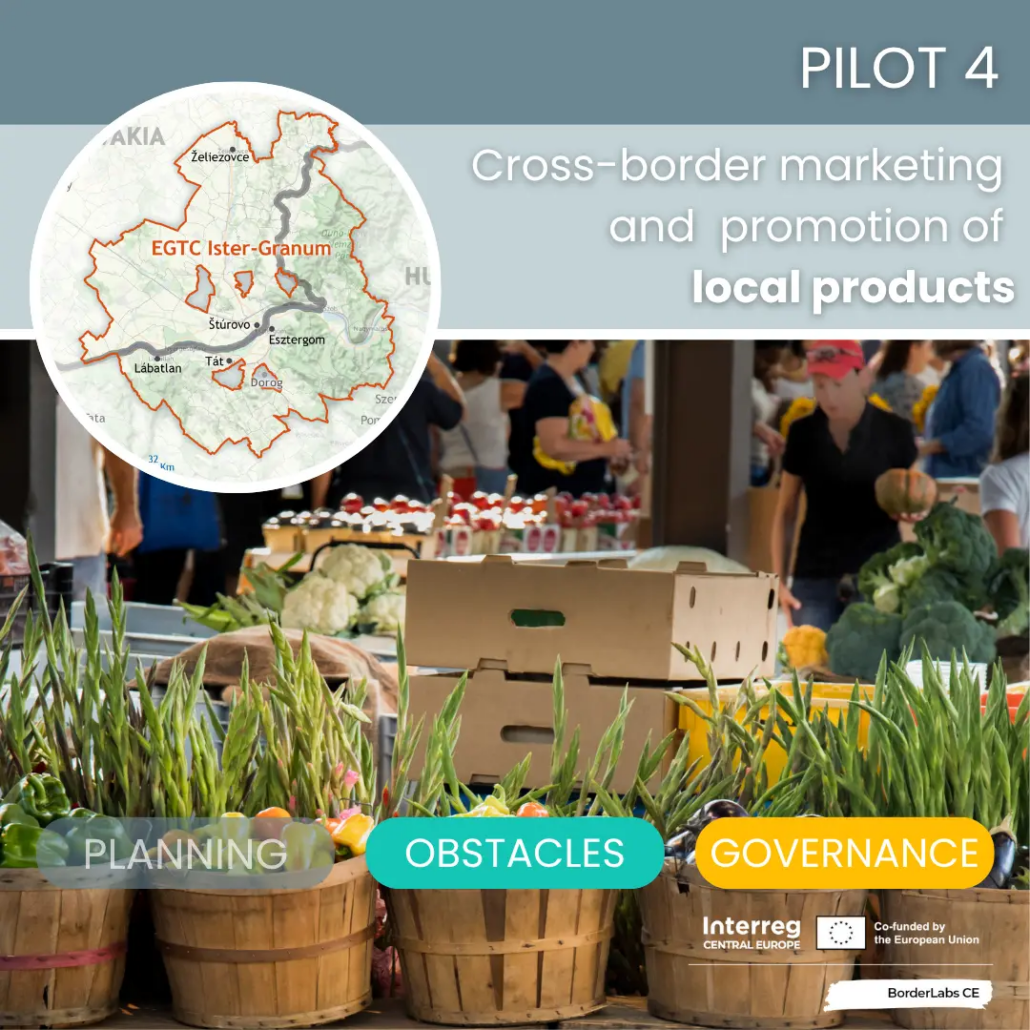
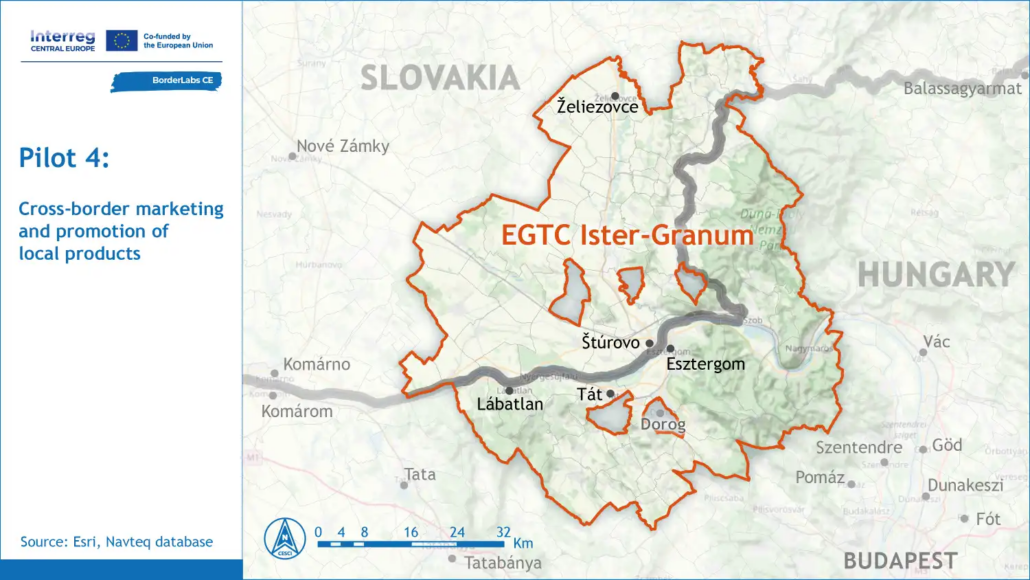
One of the main development priorities of the Ister-Granum EGTC is to support market access for local producers. Within this framework, the EGTC aims to promote cross-border development and to address legal barriers, thereby strengthening the environmental awareness of local populations and ensuring their access to healthy local food.
The justification for and need for PILOT is primarily based on the geographical characteristics of the region. Southern Slovakia is an agricultural region with many local producers. Their access to the market not only helps to diversify the regional economy and maintain environmentally sound farming practices, but also to ensure that the people of the region have access to healthy food. In this respect, people living in border regions are also generally disadvantaged, as the rules on local products are under national jurisdiction and governments do prevent local products from being sold across borders in order to protect national agricultural production. Therefore, the population of border regions only has 180-degree access to these products, and can only obtain local products produced on the other side of the border if they know they exist and buy them on the other side. However, cross-border supply is not allowed by law, or only under very heavy administrative and financial burdens.
Over the past decade, Ister-Granum EGTC has made several attempts to process, interpret and present the ever-changing national legislation, as it is these rules that set the framework for the marketing of local producers across borders. The market of the shopping community in Esztergom was quickly taken over by Slovakian traditional producers, but due to a lack of knowledge of the legislation they were unable to do so properly and were banned by the authorities. This means that not only do the population not have full access to healthy food, but local producers also have problems operating economically, as they too can only reach their potential customers in a 180-degree circle.
Although local markets in the Euroregion offer opportunities for buying and selling, awareness of these is not widespread among the local population. There is therefore a need to inform the local population and to increase their commitment to local products. In addition, the distribution of local products to larger consumers (e.g. hotels, restaurants, educational, health and social institutions, etc.) should be facilitated, which can make local producers’ operations more sustainable while reducing the ecological footprint of their own food systems.
Overall, this can contribute to a stronger Euroregional identity and a sense of cross-border regional belonging, thus weakening the divisive effect of borders.