It seems that during the last several years all over Europe and among people of very different parts of the society a feeling of fear increased. Fear to lose economic well-being, to suffer from the consequences of climate change, to lose cultural identity in a more and more multicultural world and, since February 2022, to become involved in war and military operations.
People experience a frightening gap between these and other challenges on the one side and their own personal abilities to struggle with them on the other side. For all troubles they blame the government, sometimes “those in Brussels” or in general “those up there” and “others” like foreigners, immigrants, the richest, and so on. This comes along with increasing mistrust in democracy, in democratic institutions and leads nearly everywhere in Europe to a stronger support for nationalist, populist, anti-democratic parties and an increasing social division.
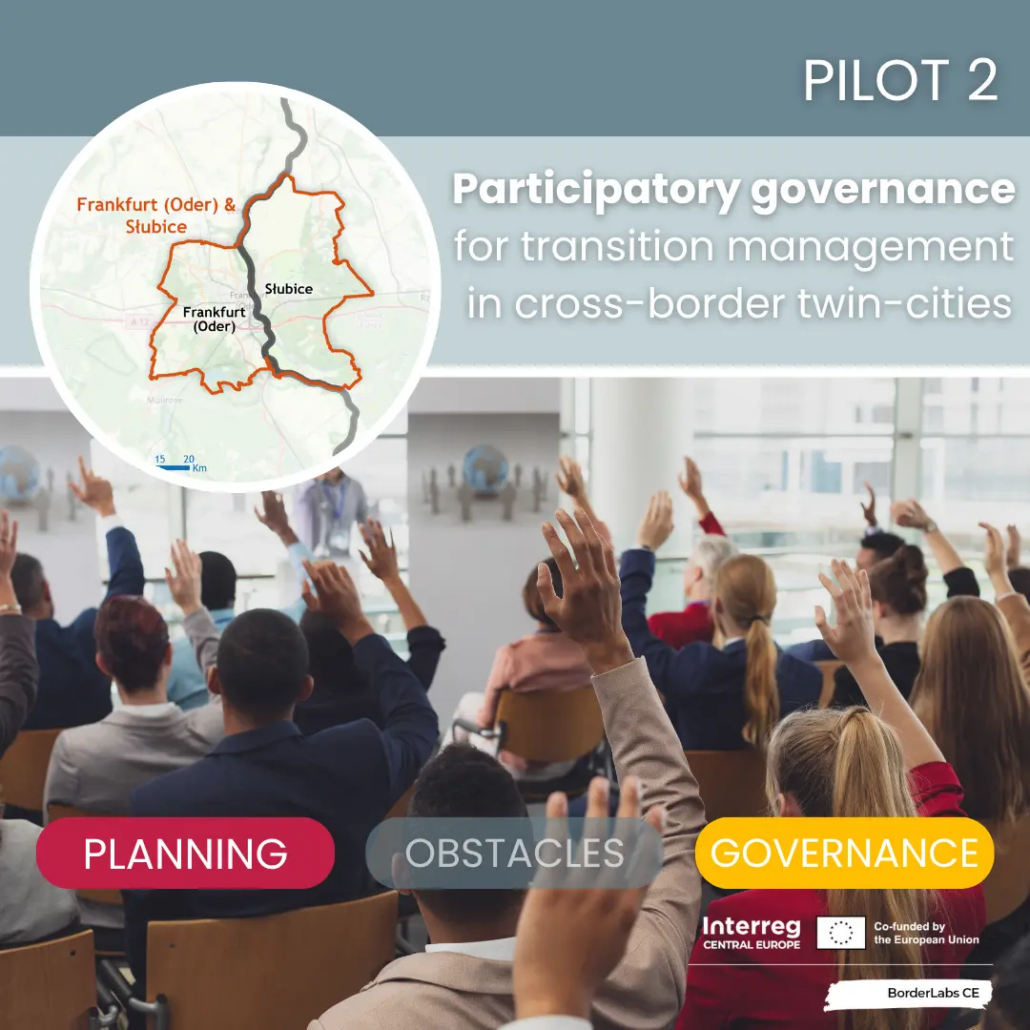
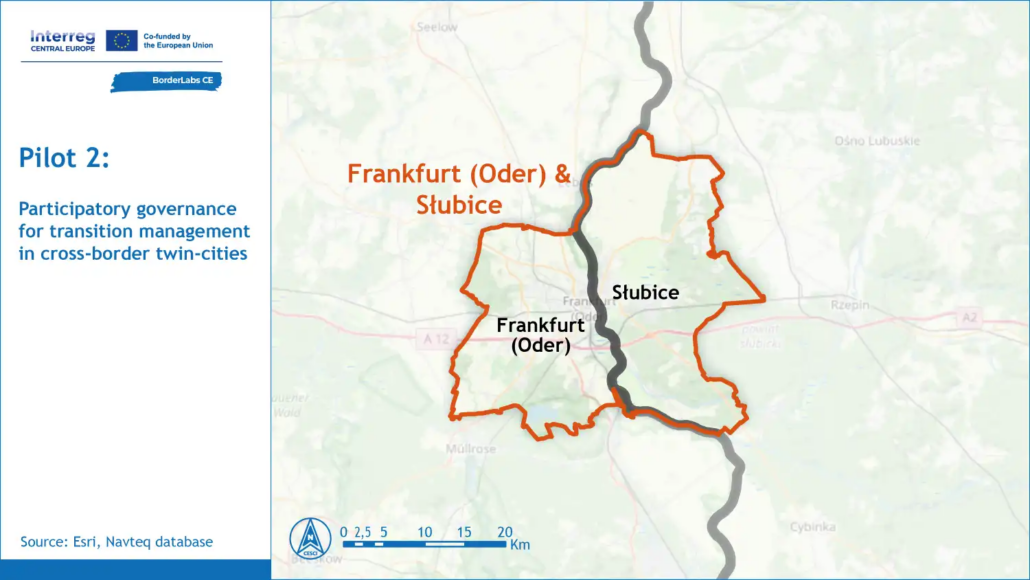
In the European Twin-City Frankfurt (Oder)–Słubice we experienced on the one hand throughout the multiple crises since 2020 (Covid pandemic and border closures, ecological disaster of the Oder river, Russian attacks against the Ukraine with millions of refugees, introduction of border controls between Germany and Poland) that in times of crisis negative national stereotypes arise – with negative impact also on cross-border cooperation and daily life. On the other hand, we experienced during joint projects in 2022/2023 that open cross-border dialogues about these challenges and our feelings can have a positive, even somehow healing effect.
So what’s the special impact about that in cross-border twin-cities? In our cities we are part of different worlds, which means countries and languages, which is even more the case in twin-cities and border regions which were until 1989 separated by the iron curtain. Today we are still living, although door to door, in different countries. And at the same time we are sharing the same European, cross-border urban space, crossing the border each day. In such a micro-climate a joint dialogue is possible, which considers different perspectives as respectable and true, and therefore sometimes creates a common ground, helping to experience the positive effect of cooperation despite of national and other differences, to regain a consideration of empowerness and self-effectiveness – as being part of a diverse society, with solidarity and cooperation as shared values.
We found these experiences worthful and encouraging enough to intensify the work on appropriate dialogue formats, to involve more citizens from our and other twin-cities, and to share them with partners in the project and in the CENTRAL EUROPE programme area. We want to invite participants of other European twin-cities to discuss and learn about how people from very different contexts still manage to live together – with the goal to generate insights not only for other twin-cities, but for European city societies in general. Therefore, the motto of our dialogue format will be: “Dealing with difference”.
————-
“Dealing with difference” has two sides for us. On the one side, “difference” can be a source of insecurity or even threat in these times of multiple crises. On the other side, it can also be a tremendous resource on how to approach social challenges within urban societies – and especially within cross-border twin-cities. And it is this shared experience of “dealing with difference” that cross-border twin-cities (and other cities with multicultural backgrounds) can use for a dialogue about how to integrate different perspectives and views of the world.
We believe that the ability of “dealing with difference” is crucial when facing today’s multiple challenges of living together – especially in times when the public dialogue culture becomes increasingly confrontational, and it seems harder and harder to actually talk to each other about our differences. We are convinced that being able to deal with difference can be helpful to overcome challenges together – whether it is in twin-cities, smaller cities, bigger cities or any other type of urban environment.
Citizens of twin-cities are designated to talk about how to deal with difference, having specific experience in being regularly confronted with different perspectives and beliefs of “the other side” in their own city. Thus, during the 1st twin-city dialogue forum in 2025, we want to discuss with different people from different twin-cities about how to deal with exactly that aspect: difference.
What makes the setting of the dialogue forum unique is to combine 1) the participants’ already existing experience of cross-border dialogue inside their own twin-city context with 2) the exposure to unfamiliar and unknown dialogue partners from other cities, therefore creating both a place where own stories in dealing with difference can be shared while also enabling the self-experience of discussing pressing issues, controversial topics and common fears with people that usually would not talk to each other. The goal therefore is not to re-educate anyone, but to learn how different perspectives can manage to deal with each other.
We are planning to invite to each dialogue forum two other twin-cities with 10+10 participants from each twin-city, resulting in approx. 60 participants during each dialogue forum. The common language will be English. The participants should represent three groups: politics, associations and citizens, including people from different social and professional background and age – especially including young people, pupils and students.